Is an AI voice agent GDPR compliant?
GDPR compliance for an AI voice agent comes down to a few specific requirements: getting caller consent through a configurable announcement at the start of each call, storing data with encryption both at rest and in transit, setting clear data retention periods, and being able to delete a caller's data on request. Televanta is built around European regulatory requirements, runs on EU data hosting, and provides a Data Processing Agreement for any customer that needs one.
Consent is usually the part businesses worry about most, since it's the piece a caller actually experiences directly. Every Televanta call opens with a short announcement along the lines of "this call may be recorded for quality and training purposes."
That consent gets logged automatically the moment the call starts, so there's a clear record that it happened, rather than relying on someone's memory of whether the notice was played.
The deletion side matters just as much, even though it's less visible day to day. If a customer later asks for their data to be removed, their call records get deleted within whatever retention window has been configured, without needing a person to remember and run the request manually each time.
That's built into how the system handles requests from the start, which matters because a manual process is exactly the kind of thing that gets forgotten under normal workload pressure.
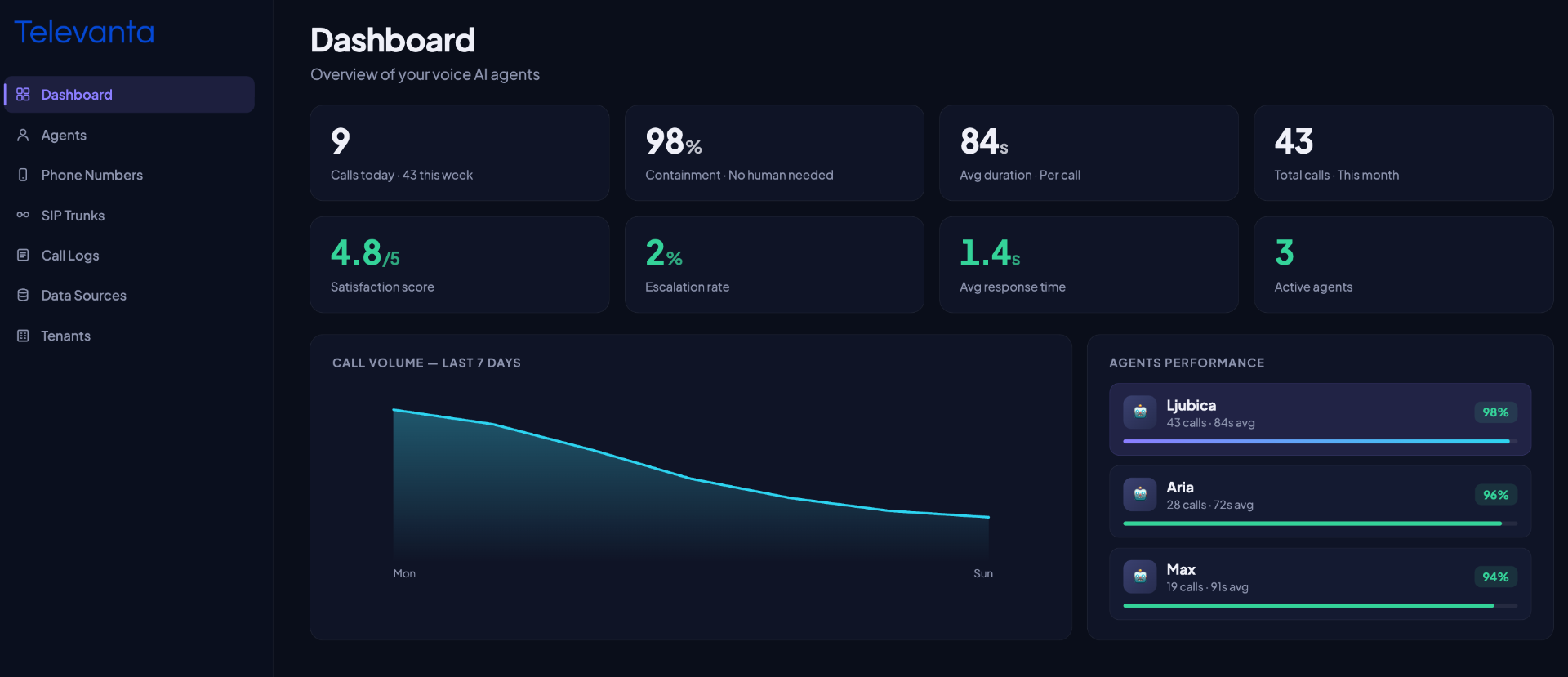
For example, an insurance company shows why this matters in a practical, business sense rather than just a legal one. It uses Televanta and needs to pass an internal GDPR audit, the kind that can otherwise eat up days of a compliance team's time gathering documentation from scratch.
Televanta provides full documentation of data flows, storage locations, retention policies, and the DPA all in one place, and the audit ends up getting completed in a single review session instead of dragging on.
It's worth being upfront that compliance isn't something a tool can fully hand over without any responsibility left on the business's side. A company still needs to decide its own retention periods, confirm its lawful basis for processing data, and make sure its own internal policies line up with what the tool provides.
Televanta gives the technical and documentation foundation. The business still owns the decisions about how that foundation gets used.
This distinction matters more for some sectors than others. A healthcare provider or financial services company, for example, often has extra rules on top of standard GDPR, and those additional requirements need to be handled through the business's own configuration choices, such as shorter retention windows or extra approval steps before certain data leaves the system.
Businesses based in Croatia and elsewhere in the EU can generally deploy Televanta with a reasonable level of confidence that the platform itself meets the technical bar GDPR sets. What still needs local attention is the business-specific detail: which language the consent notice plays in, what retention period fits the company's own record-keeping obligations, and who internally is responsible for handling a deletion request when one comes in.
None of that is automatic, and treating it as a one-time setup task rather than an ongoing responsibility is usually where gaps show up later.
See how AI Call Agent works in your stack.
A 30-minute walkthrough with a solutions engineer. No slides, just your use case.
Book a Demo →