
Can an AI Call Agent handle outbound calls?
Yes. Televanta supports outbound calling alongside inbound.
The common uses are appointment reminders, payment due notifications, satisfaction surveys after a service, follow-up calls to leads triggered by a form submission or CRM event, and proactive outage notifications. Outbound calls use the same natural voice and language understanding as inbound calls, so they come across as real conversations rather than the recorded robocalls people are used to hanging up on.
That distinction matters a lot to how these calls actually land with people. A recorded robocall gives someone nothing to respond to except pressing a number or hanging up.
An AI-driven outbound call can actually hear what the person says back, ask a follow-up question, and adjust based on the answer, the same way a real phone conversation would.
For example, a dental practice gives a clean example of this in action. It uses Televanta to call patients 48 hours before their appointment to confirm they're still coming.
The AI handles confirmations, cancellations, and reschedule requests, all within that same call, rather than just playing a message and hanging up. No-show rates drop by 30 percent once this is running, largely because patients who were going to cancel anyway now do it early enough for the slot to be rebooked, instead of just not showing up.
A recruitment agency shows a different use case entirely: outbound calls used for screening rather than reminders. It uses Televanta to call candidates 24 hours after they submit an application.
The AI asks three qualifying questions, records the answers, and updates the CRM automatically. Recruiters end up with a screened shortlist without ever picking up the phone themselves for that first pass.
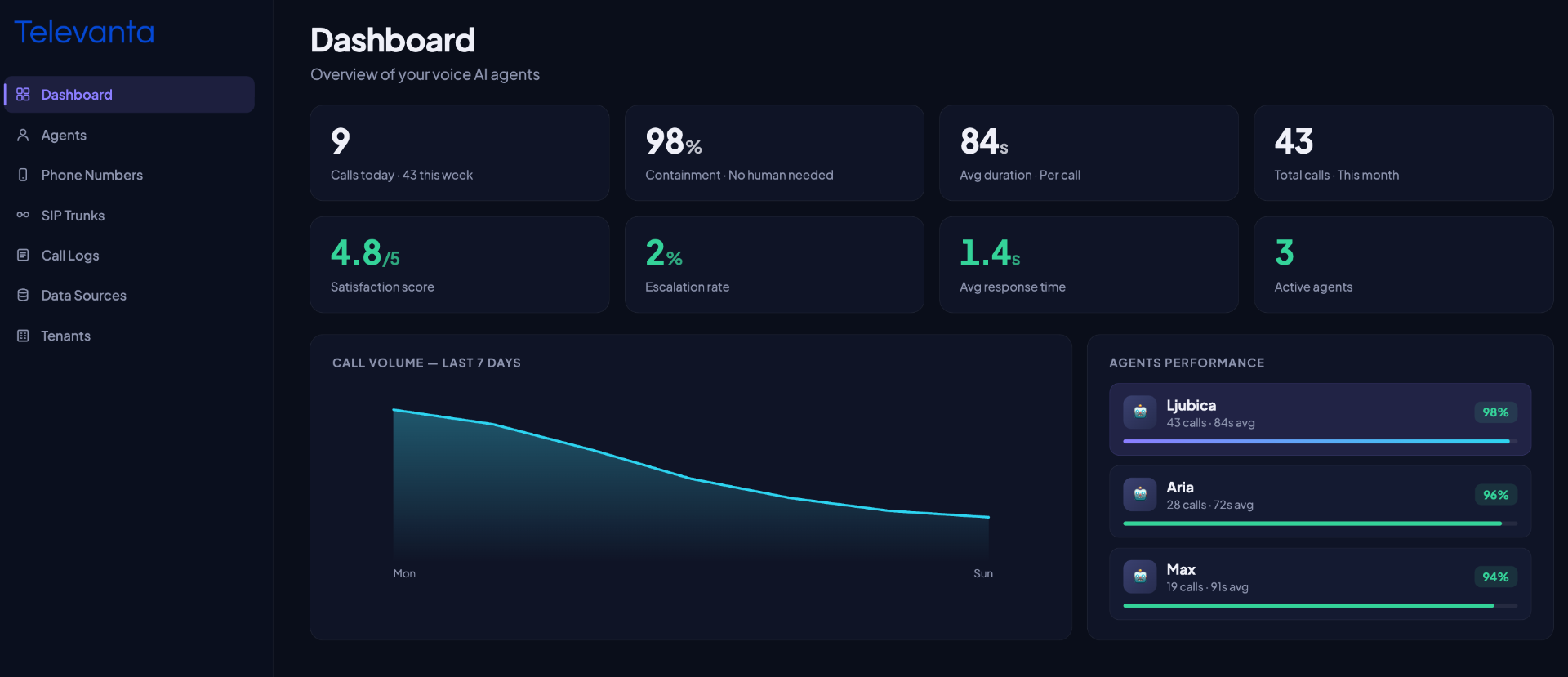
All of this activity, inbound and outbound both, gets logged in the same Televanta dashboard, so a business isn't managing two separate systems or two separate sets of reports. That matters more than it might sound like it should, since keeping inbound and outbound data in one place makes it much easier to see the full picture of how a customer has interacted with the business, rather than piecing together two disconnected histories.
Outbound calling also comes with its own set of rules worth knowing about upfront: consent requirements, do-not-call lists, and disclosure obligations vary by country and by the purpose of the call. A reminder call to an existing patient about their own upcoming appointment is treated very differently under most regulations than a cold outbound sales call to someone who's never interacted with the business before.
Setting up outbound calling properly means building those distinctions into the call rules from day one, not treating every outbound call the same way regardless of its purpose.
Timing matters more for outbound calls than people tend to assume going in. A reminder call placed at a reasonable hour, with a clear reason stated up front, tends to be well received.
The same call placed too early, too late, or without a clear purpose can come across as intrusive no matter how good the underlying voice technology is. Most businesses set specific calling windows and stick to them, since the value of outbound automation depends heavily on it being used thoughtfully rather than just as often as technically possible.
See how AI Call Agent works in your stack.
A 30-minute walkthrough with a solutions engineer. No slides, just your use case.
Book a Demo →